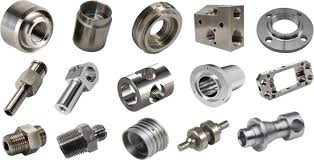
Custom Mechanical Assembly Services for Complex Engineering Requirements
Precision is the currency of modern industrial success. As product complexity increases across sectors like aerospace, medical devices, and automotive, the demand for flawless Mechanical Assembly Services has never been higher. Companies are moving away from manual, disjointed processes and embracing partners who utilize advanced manufacturing technology to guarantee consistency and speed.
Integrating state-of-the-art technology into assembly lines isn’t just a luxury; it is a strategic necessity for maintaining quality control and meeting tight deadlines.
The Data Behind Automated Assembly
The shift toward technology-driven assembly is supported by compelling industry data. Manufacturing facilities that implement semi-automated or fully automated assembly systems report significant improvements in operational metrics.
Error Reduction: Automated optical inspection (AOI) and robotic assembly arms can reduce defect rates by significant margins compared to manual assembly. Human fatigue is a natural variable in manual processes, whereas calibrated machinery maintains the same level of precision from the first unit to the ten-thousandth.
Throughput Efficiency: Advanced manufacturing technology allows for continuous operation. Facilities utilizing smart conveyance systems often see production throughput increase by 20% to 30%, enabling faster time-to-market for new products.
Cost Management: While the initial investment in technology is high, the long-term cost per unit decreases. Predictive maintenance sensors on assembly equipment prevent costly downtime, ensuring that production schedules remain uninterrupted.
Understanding the intricacies of mechanical assembly services can help businesses make informed decisions when selecting a manufacturing partner. Here are common questions regarding high-tech assembly processes.
What distinguishes advanced manufacturing from traditional methods?
Advanced manufacturing utilizes connected systems, such as the Internet of Things (IoT), robotics, and real-time data analytics. Unlike traditional methods that rely heavily on manual labor and post-production testing, advanced systems monitor quality in real-time during the assembly process itself. This allows for immediate corrections and higher overall yield.
How does technology ensure reliability in complex assemblies?
Reliability is achieved through repeatability. Advanced manufacturing technology uses programmable logic controllers (PLCs) and precision robotics to perform tasks with exact specifications every time. For complex mechanical assemblies involving tiny fasteners or delicate components, torque sensing tools ensure that every screw is tightened to the exact requirement, preventing product failure in the field.
Which industries benefit most from tech-backed assembly services?
While almost any sector can benefit, industries requiring strict regulatory compliance see the most value. Medical device manufacturing and aerospace require traceability and zero-defect mandates. Advanced systems automatically log data for every unit assembled, creating a digital audit trail that manual logs cannot match.
Securing Your Supply Chain
Choosing a partner for mechanical assembly services is about trust and capability. By prioritizing manufacturers who invest in advanced technology, you ensure that your products are built to the highest standards of quality. In an era where margin for error is non-existent, leveraging the power of automation and data is the surest path to reliable production.